



Hydraulic systems rely on clean, stable fluid flow to operate efficiently. Contaminants such as metal particles, dust, and debris can accelerate wear, reduce performance, and lead to premature component failure. To control contamination, systems commonly use strainers and filters. While both serve a protective role, they are built differently and perform different levels of particle removal. Understanding how hydraulic tank filters, hydraulic reservoir suction strainers, and suction filters function helps in selecting the right component for system protection and performance stability.
Strainers in Hydraulic Systems
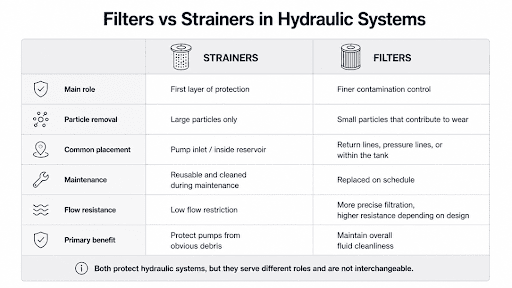
Strainers act as the first layer of protection against large debris in hydraulic circuits. They are usually made from perforated metal or coarse mesh and placed where fluid enters the system.
Hydraulic reservoir suction strainers sit inside the tank at the pump inlet. Their role is simple: stop larger particles before they reach the pump, reducing the risk of damage from debris such as metal fragments or rubber pieces.
Strainers are reusable and can be cleaned during maintenance. However, they do not capture fine particles, so they are not intended for final fluid conditioning. They are best used where flow restriction must stay low while blocking obvious contamination.
Filters and Their Role
Filters handle finer contamination control. Unlike strainers, they use layered media designed to capture small particles that contribute to long-term wear in hydraulic components.
Hydraulic tank filters help maintain fluid cleanliness inside the reservoir by controlling contamination that returns during operation. This reduces buildup over time and supports longer service life for pumps, valves, and actuators.
They can be installed in return lines, pressure lines, or within the tank. Filters are typically replaced on schedule rather than cleaned, depending on system design and operating conditions. Their focus is maintaining fluid quality rather than blocking large debris.
Suction Filters vs Hydraulic Reservoir Suction Strainers
Suction-side protection often comes down to two options. Hydraulic reservoir suction strainers are common in many systems because they allow free flow while stopping large contaminants.
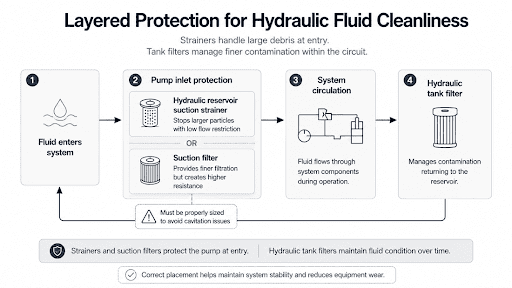
Suction filters provide finer filtration at the pump inlet, but they create higher flow resistance. If not properly sized, this can lead to cavitation issues.
The choice depends on system requirements. Harsh environments often rely on strainers, while cleaner or more sensitive systems may use suction filters for better contamination control.
Hydraulic Tank Filters in System Protection
Hydraulic tank filters help maintain fluid condition over time by managing contamination returning to the reservoir. Without them, particles keep circulating and increase wear on system components.
In many systems, they work alongside suction strainers or suction filters to provide layered protection. Strainers handle large debris at entry, while tank filters manage finer contamination within the circuit.
Regular replacement helps maintain stable operation and reduces downtime linked to contamination issues.
Key Differences That Matter
- Strainers handle large particles only and mainly protect pumps at the intake stage
- Filters remove fine contamination and support overall fluid cleanliness
- Strainers are reusable and create low flow resistance
- Filters are replaceable and provide more precise filtration
- Both are used in hydraulic systems, but they serve different roles and are not interchangeable
- Correct placement helps maintain system stability and reduces equipment wear
Practical Selection Guidance
For pump inlet protection, hydraulic reservoir suction strainers are commonly used when flow restriction must stay minimal. If the system requires tighter contamination control, suction filters may be used instead, provided the pump can handle the added resistance.
For overall system cleanliness, hydraulic tank filters remain essential. They support consistent fluid conditions and reduce the burden on downstream components. Selecting the right combination depends on operating conditions, contamination levels, and equipment sensitivity.
Keep Your Hydraulics Running Clean—Before Downtime Gets Expensive
Contamination doesn’t wait, and neither should your maintenance plan. Whether you need hydraulic tank filters, hydraulic reservoir suction strainers, or dependable suction filters, the right component makes a real difference in system performance and equipment life.
DOMS Inc. supports industrial operations with filtration and hydraulic components built for demanding environments. If your system depends on clean fluid flow, it’s worth getting the right fit from the start.
Check available products or contact us and request support from our team.